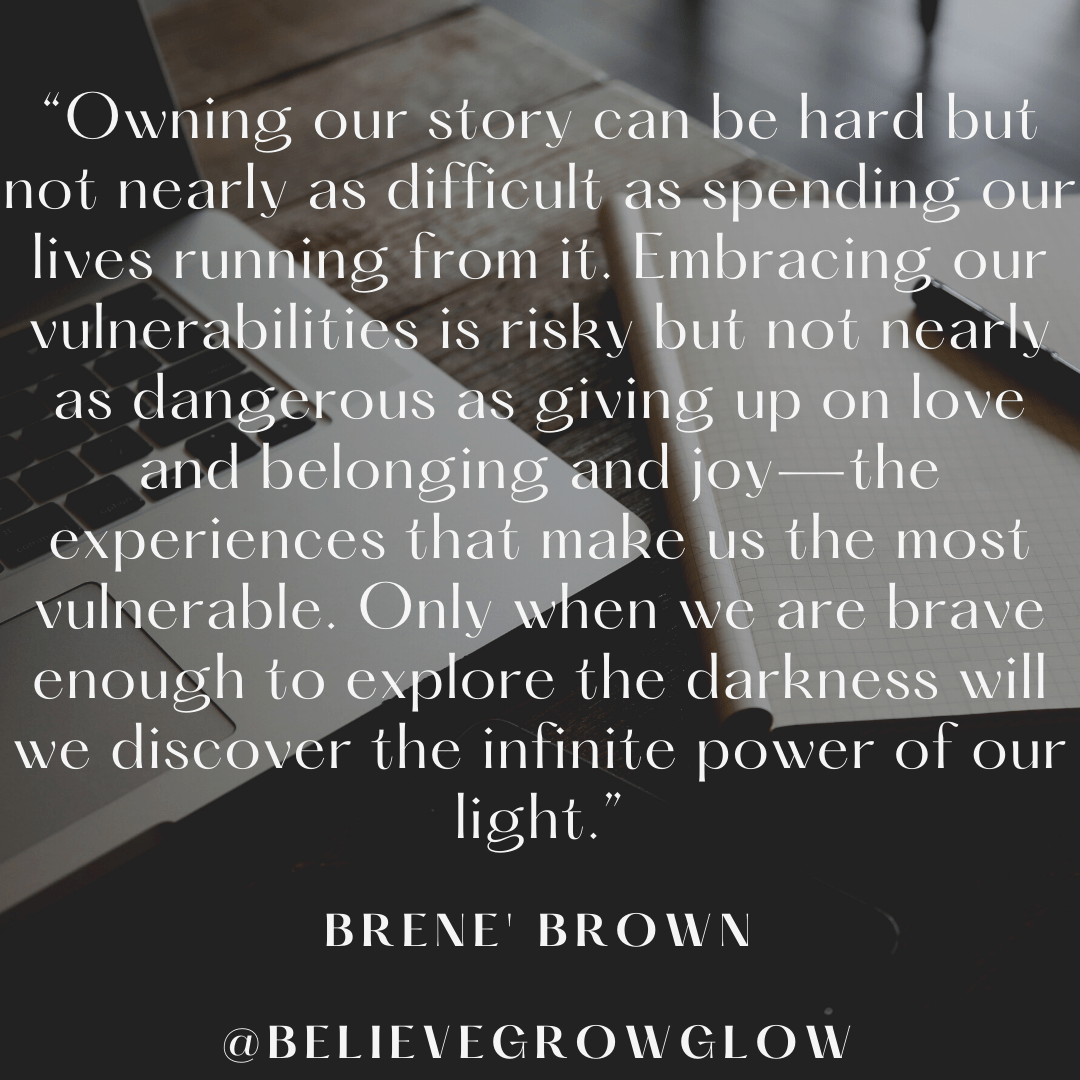
My intent in sharing my story publicly is to educate others on what trauma can look like, how it can manifest in our lives even when we think we’ve escaped it, and how we can overcome it and heal (ourselves and by extension our families and communities).
Do the best you can until you know better. Then when you know better, do better.
-Maya Angelou
It’s come to my attention that despite this post, people are approaching my mom with judgement and shame for past mistakes that I’ve shared here.
If you are judging people on their past mistakes, I’d encourage you to ask yourself – are you ready to be judged as a person based on your past mistakes that you’ve acknowledged and done your best to make amends on? Or do you hope people approach you with empathy and compassion for what you were going through at the time that lead to those mistakes?
I am not my past mistakes. I am no longer the person that made them. I have learned from my mistakes, made amends wherever possible when I hurt someone, and changed my behavior. I continue to grow intentionally every day. I’m still very much human, learning, and growing. I may make mistakes in the future that I cannot see right now. I’m only doing what we can all do – my best as the version of myself that’s lived through everything I have and learned everything I have. Because of this I do my best not to judge others on their own pasts, but instead base my opinions and boundaries on how they are showing up today.
My parents did the best they could. I did not know that when I was a child, but I do now. They both came from difficult childhoods, as did their parents before them. None of what I share is to condemn anyone for past mistakes. It’s to show that sometimes with the best of intentions we hurt those we love. It isn’t because we don’t love them or want the best for them, it’s because our best is only what we’ve been taught so far in life. Some of us started with hurtful examples of love and are still learning what real, authentic love looks and feels like. But we’re doing our best to learn and that’s all any of us can do.
When we live in ignorance or denial of the impact a difficult past has on us, refusing to acknowledge the hurt we’ve caused others, there is no room for healing or growth. This blindness to our own pain causes us to unintentionally hurt others. When those others are children, it continues the cycle of suffering.
Who we are and how we engage with the world are much stronger predictors of how our children will do than what we know about parenting. In terms of teaching our children to dare greatly in the “never enough” culture, the question isn’t so much “Are you parenting the right way?” as it is: “Are you the adult that you want your child to grow up to be?”
-Brene Brown
My mom was unable to acknowledge the past hurts for a long time and we were unable to have a relationship that was satisfactory for either of us. There is a lot of pain on both sides in any estranged/strained parent-child relationship. Many adult children of toxic parents wait in vain their entire adult lives for acknowledgement from that parent. I am grateful to have the relationship that I have with my mom now.
Where we are isn’t perfect, but it’s progress. I’m proud of how far she’s come from the teenage mom trying to escape her own painful broken home and build a better life for herself and her kids who just didn’t know how. I’m grateful that she’s taken an interest in learning, healing, and growing as a person instead of spending her entire life in pain. It takes courage and strength to face our past, admit our mistakes, and decide we’re going to do the work to have a different future.
Where do you stand with your awareness around the impact of your past?
How did you feel as a child – did you feel safe, loved, and connected to others?
How do you feel now? What are your feelings and beliefs around love, finances, trustworthiness of others, and being vulnerable?
Where are you less than satisfied, but telling yourself “that’s just the way it is” or “every (relationship, job, person, company, etc.) is like this so there’s no point trying to change?”
If we grew up in limited, difficult, or hurtful environments, simply leaving those environments behind does not mean leaving behind the impact.
Trauma, especially at a young age, has significant impacts on our development, but we can heal ourselves through education and action. We do not have to continue to suffer.
I read this book recently and highly recommend it for anyone that may wonder if they, or someone they know, is struggling with unresolved trauma.
Some tips to get started on self-awareness and growth:
- Journal daily. Start with the questions above. Follow me on IG for weekly prompts.
- Reflect on where you’ve struggled in the past or are currently struggling (relationships, jobs, finances, hobbies/interests, organization/environment) and would like to make changes.
- Invest in personal growth for at least 15 minutes a day. Check out my resources page for specific recommendations. Watch a TED/TEDx talk (5-18 minutes). Listen to a podcast (5 minutes – 1 hour+). Read or listen to a chapter of a book.
- Get help. At different points on my journey I have found it helpful to work with a therapist (to deal with past trauma) and a coach (to help me set goals for a better future and hold me accountable). If you’re ready to work with a coach, I have 1:1 spots available. E-mail Jenn@BelieveGrowGlow.com for more information.
 Believe Grow Glow